
How to Do it Effectively- Stress Free!
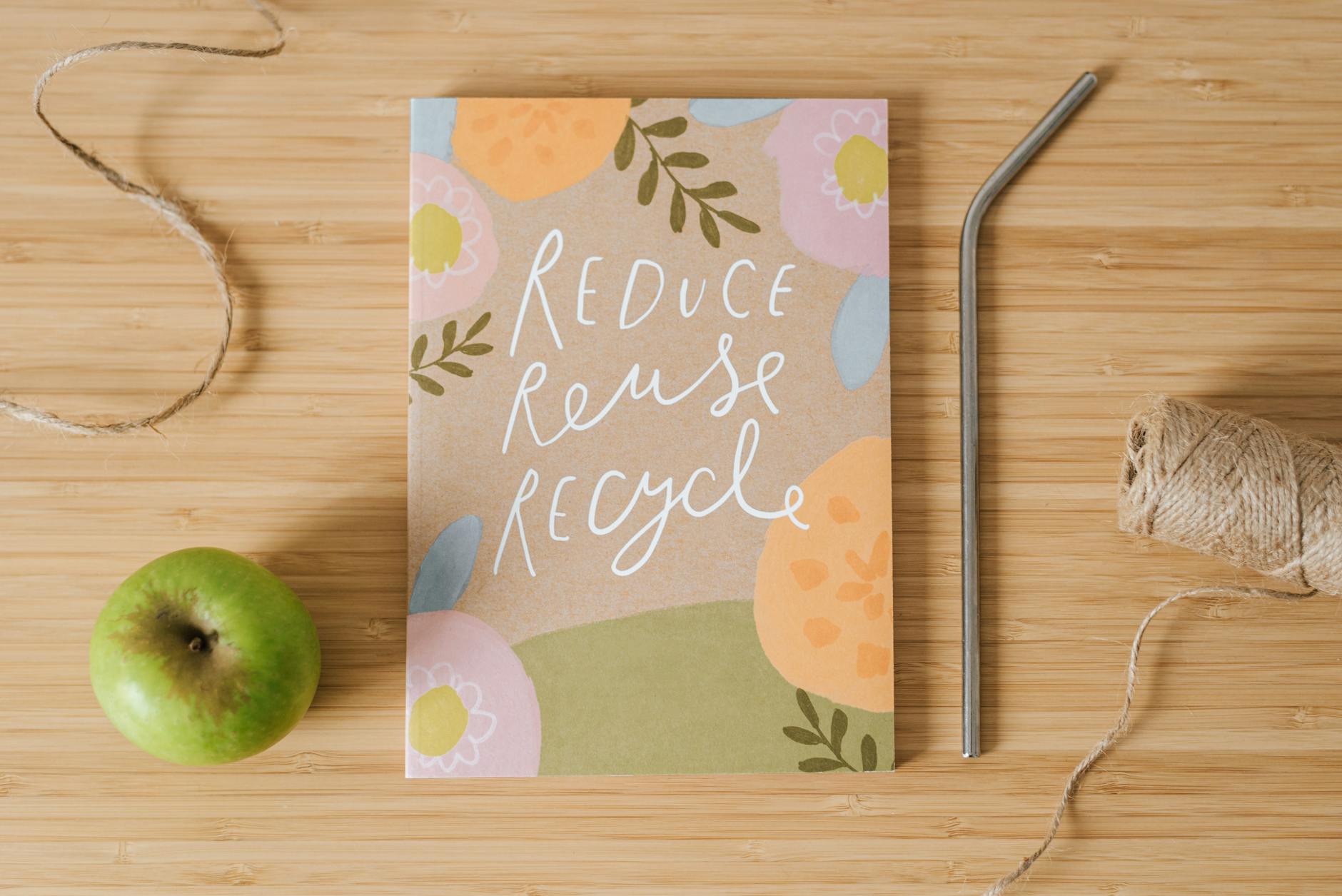
I had mentioned some wonderful self help books for mature moms that I highly recommend (see my post), and one of them is The Gentle Art of Swedish Death Cleaning by Margareta Magnusson.
I went to Sweden as a young girl, and definitely noticed they lived very minimally. Many things were very simple, from the furniture (the inspiration for Ikea) to their meals. I remember the cucumber sandwiches with homemade bread and cheese.
This idea of Death Cleaning became a thing a few years back. It’s not a very uplifting name, but it makes sense. To quote Ms. Magnusson,
“Do not ever imagine that anyone will wish-or be able-to take time off to take care of what you didn’t bother to take care of yourself. No matter how much they love you, don’t leave this burden to them. Let me help you make your loved ones’ memories of you nice-instead of awful.”
Having raised three children and managed a small home for years, it’s always been important to me to keep things organized, and clutter has always made me crazy. But as much as I’ve tried, I’ve been as guilty as many people when it’s so easy to buy anything you need. (Why does Amazon make it so damned easy?) So, I’m not happy to admit that I’ve accumulated a good amount of STUFF.
It’s just not fair for children to have the daunting task of getting rid of our things after we’re gone. I have been that child very recently, given the need to clean out my father’s home after his passing. I would not consider my parents to have been packrats at all, but there was still a lot to do, and a lot of decisions to be made.
People in our society have a hard time making decisions, and we face so many every day, down to what to get at Starbucks! There is actually research that shows that having too many choices makes us unhappy (The Paradox of Choice, 2004, Barry Schwartz).
So instead of ten (or more!) coffee cups to choose for your morning coffee, what if you only had two- and kept another say, six in the cupboard for when your children are around at Christmas-time, or you decide to host a hot chocolate bar? (See post).
Death Cleaning Process
Here’s how I’ve done this over the years to keep things manageable, but I continue to do it periodically.
- Go through ONE drawer, closet or other space, and set a schedule. Will you do it once a month, every six months? Every month in the summer? Up to you. This includes:
- A junk drawer
- Clothes closets and drawers
- Books
- DVDs, CDs
- Beauty supplies
- Cleaners
- Papers/photos
- Kids’ Stuff
- Fill in the blank!
2. Pick a space that needs some help, and give yourself ample time. Set the mood by playing relaxing music, having a glass of wine, or maybe meditating before starting. Ask a friend to help. Whatever makes you feel centered and ready to make decisions.
You may want to prioritize which type of item is the easiest for you (for me it’s clothes), and start there. Doing the easiest first will give you some confidence to know that you can do it!
3. Look at each item and ask yourself:
- How does this item make me feel?
- Does it make me feel happy?
- Do I regularly use/wear it?
- Are there new things I’d like that would make me happier?
- Will this item have meaning or value to my children one day?
Instead of these meaningful questions, we tend, instead, to say any one of these statements in our minds, as they relate to our belongings. Next to each statement, see how I respond. This may be helpful in changing your mindset.
I spent good money on it. If donating, you are getting twice the use out of it, hence making your money go even further. If throwing away, you got your money’s worth and it made you happy for the years you used it.
Consider recouping some money by selling things on eBay, Facebook Marketplace, or even having a yard sale if you have lots of stuff.
Someone I cared about gave it to me. That person intended you to be happy when they gave it to you. Are you still happy? If not, would they want that for you? NO. If donating, it will now give someone else happiness. What’s even better, donating to Good Will, Salvation Army, etc provides things to underserved people who might not ordinarily be able to afford it. They can get it for free or a nominal price. That’s doing good for the world! Your loved one would not have an issue with that, I can pretty much guarantee.
It holds a memory for me that I might forget if I toss it. Your good memories of a person, event, trip, or time in life, are not going to disappear because you don’t have a physical thing. But if you’re afraid of this, take a photo of it! Keep your photos in a master file on the computer, and use them as scrolling screen savers. My husband does this, and it’s fun to see photos go by of different things we’ve done together.
I will change something about myself or the item: ie, I will fix something that’s broken, lose weight to fit into clothes, etc. This is where I need to be a little harsh. You won’t. It’s wishful thinking to think you’ll make these kind of changes if you haven’t done it in years. If you have lots of extra time and energy to fix something and know how to do it, fine. But otherwise don’t give yourself more stress!
It will go to a landfill, which is not environmentally friendly. I agree, throwing things away should be a last resort. But if you’ve exhausted donating and recycling, it needs to be an option. You are honestly not being irresponsible if you recycle most of your stuff.
What if I regret it? You might. There may come a time in life when you need an extension cord, and you threw one away that was broken. You have to be ok with the fact that some items will need to be replaced with new ones. The old ones served you well, so say thank you and move on. Buy something that works better for you now.
If you notice, all these statements come across as excuses. We try to talk ourselves out of things- that’s what the mind does! Only taking action will bring about any changes. (Self help books post again- The Five Second Rule, by Mel Robbins).
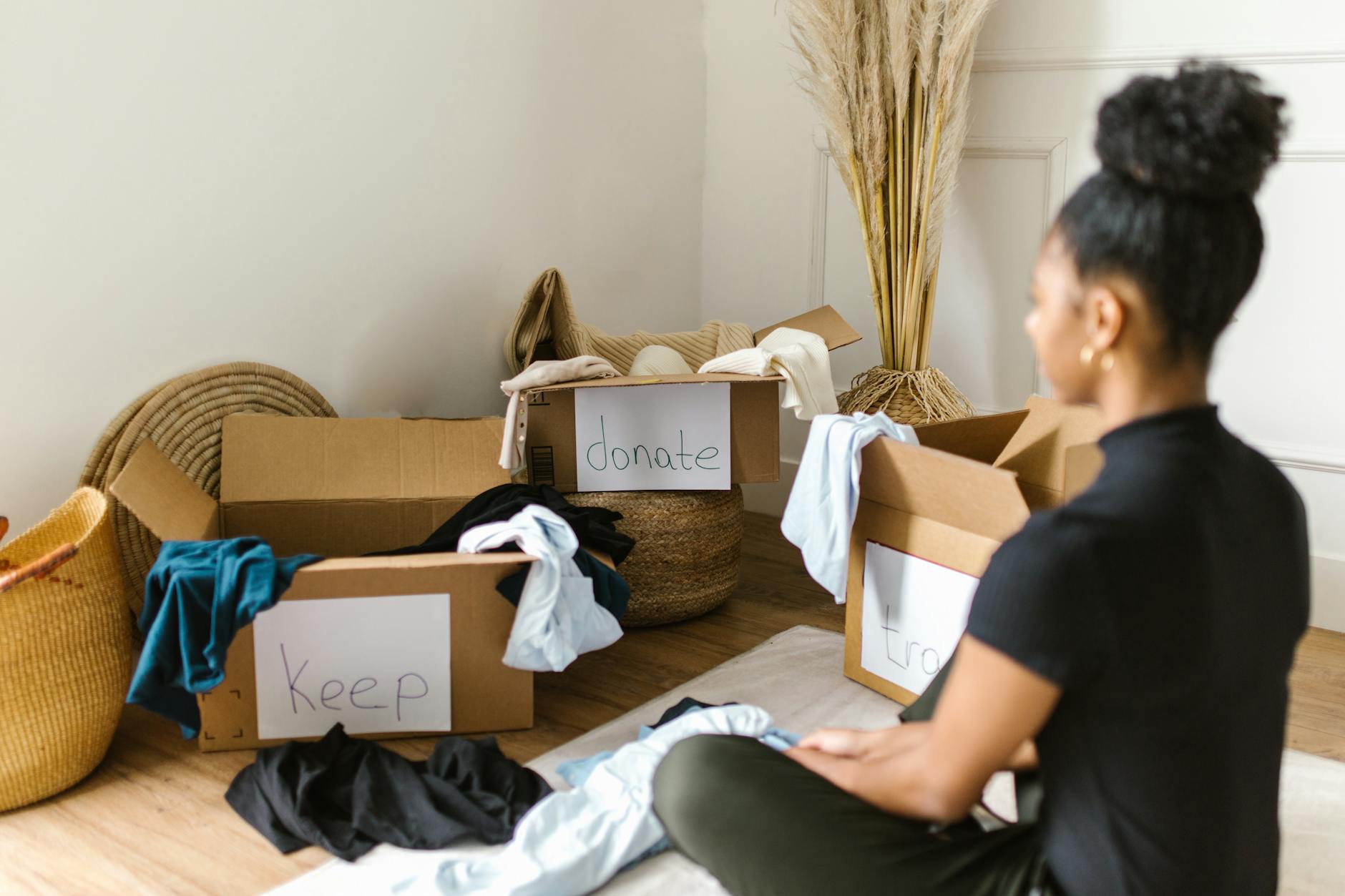
4. There are four options for your stuff. Donate, recycle, pitch and keep. Decisions should be made in that order. Keep is the LAST option, and should only be done if you can answer YES to the questions above (does it make me happy? etc).
Examples of Ways I Clean Areas
These are some practical ways I go about working with the following areas.
Clothes. I seriously look at everything hanging in the closet and honestly make a judgement call. When I say ‘seriously’, the key is to be 100% HONEST with yourself (this is why you really need to be in a positive head space). What have I not worn in like two or three years? Why have I not worn it? Am I waiting for some reason (losing weight )? What was the purpose of having those items, and does that purpose serve me?
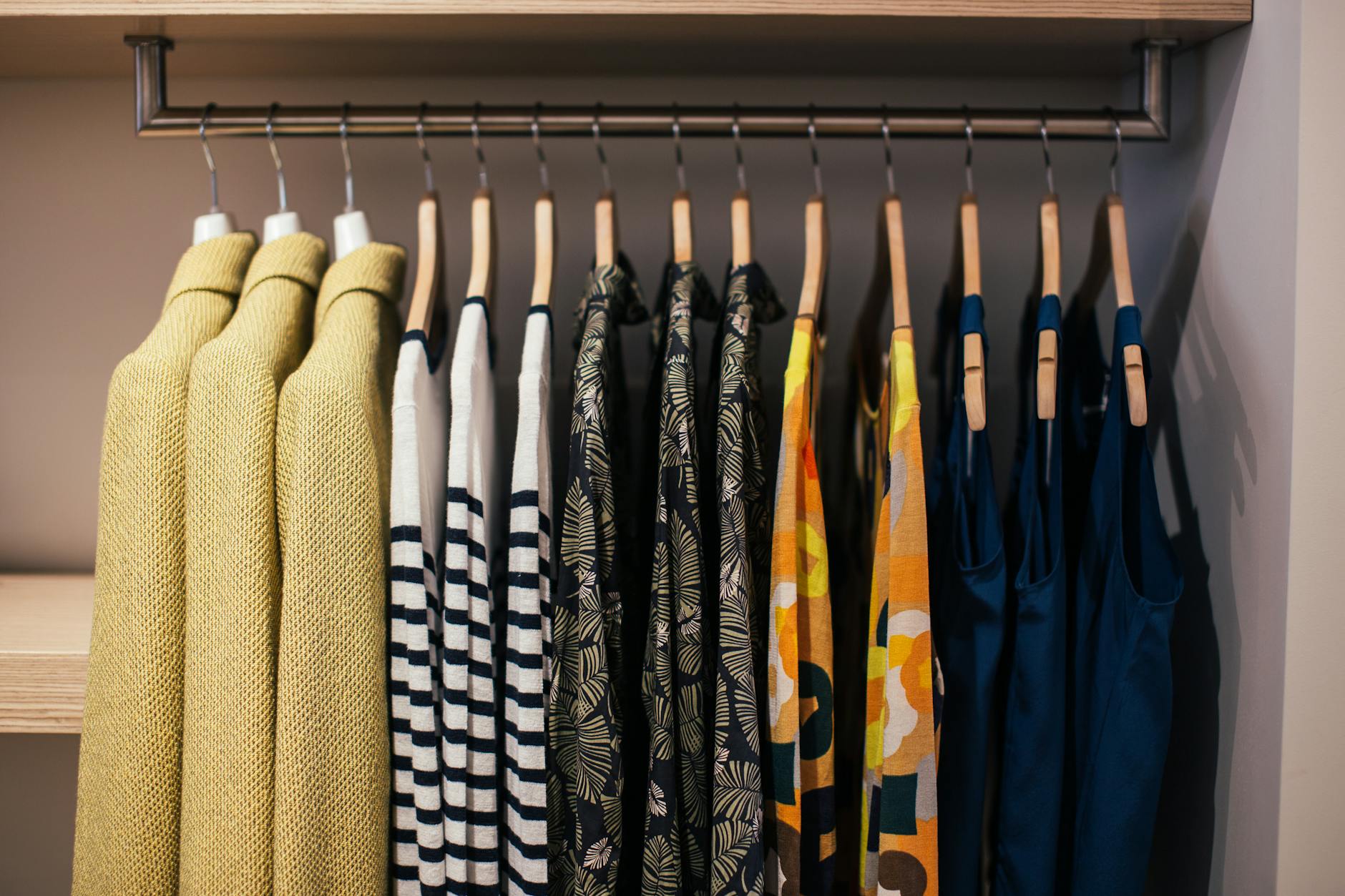
For example, I had a bunch of work blazers that were great additions to pants or a dress when I was in an office everyday, but now I’m not. There’s just no need for them anymore. I was holding onto some of my mother’s sweaters and things, but realized I just don’t wear them. No offense to my mother, but I just didn’t really like them that much.
I have a friend who, every time she wants to purchase a new piece of clothing, she gets rid of one thing she has. Love it. Doing this on an ongoing basis is even better. You avoid the need to make so many decisions all at once, something this process requires and can admittedly be difficult.
Dishes. When my kids were young, I bought a lot of silly dishes at Target. They are SO cute, and I loved getting them for special occasions. Plus, since they were young, there were times the dishes were knocked over, and with plastic you’re in good shape. I even had a good number of plastic wine glasses for the same reason.
A few years ago I took inventory of ALL these dishes. I decided, since my kids are now young women, and I am a grown woman who wants REAL dishes to eat from, there’s no need for plastic anymore. I put all those plastic dishes and cups into recycling, and bought some new ones that make me smile. Done.
Organizing What You Do Keep
With ‘keep’ being your last resort, you must be sure that you are 100% certain what you are keeping is meaningful. If so, you are certainly entitled to keep it, but you want to make sure to have adequate space for it, and also that it’s organized so your loved ones can easily manage it, if necessary.
Here are some ways to keep those items organized and accessible.
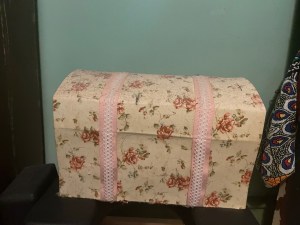
Scrapbooks. I went through a huge chest of all the cards, letters and emails my mother kept from us kids, and our kids too. It was fun to look at home-made cards and poems, and I kept a few but recycled the rest. The few I kept in scrapbooks. I highly suggest using scrapbooks for these types of sentimental things. I have kept memories of my kids throughout their lives -photos, pictures, cards, notes, awards, report cards, etc- in scrapbooks that they LOVE to look at, even today.
Along these lines, I keep all the greeting cards my husband has bought me in cute little bags. I love to take them out now and again- they make me so happy!
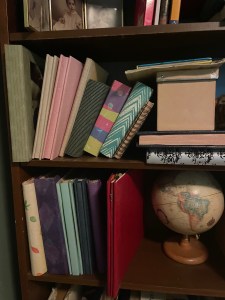
Kids Keepsakes. One of the best things I did, starting with my oldest daughter, was to keep their meaningful collectibles organized. I have a little mini-chest for each daughter, with their baby book, book of sayings, calendar, photos, Christmas ornaments, sports’ trophies, Girl Scout sashes, etc.
It is my intention to give them the little chests (and the other things if they want them) when they get married. I think this makes for a very meaningful tradition.
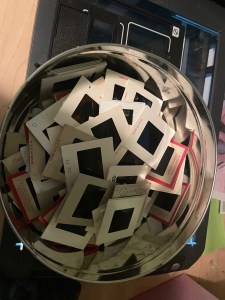
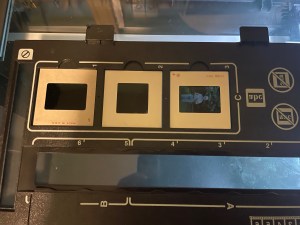
Photos, slides, old cassette tapes, record albums, DVDs. My father took so many pictures in the old days that were made into slides so we could watch them on a slide projector. Yes, I am old!
There are so many kinds of equipment and companies these days for scanning and digitizing these things. I was able to scan and save all the slides so easily!
Tips on Donating and Recycling
Donating. Research what’s in your area that takes specific items. We took my parents’ books to a local book shop that accepts donations once a week in the neighborhood. Clothes go to Goodwill in general, but we actually took my father’s work suit jackets to Dress for Success. We felt a lot better knowing these items will be put to good use. My mother bought almost all their clothes from LL Bean and Lands End, so they weren’t cheap clothes at all. The fact that someone could use them was wonderful.
Recycling. In addition to all the paper and plastic that can go out on your regular garbage pick up day, consider places that can actually use what you’re pitching. We discovered that Staples recycles electronics. My husband is a database manager, and his whole life he was into Apple products, among other things. So needless to say, he has a LOT of electronics, from computers, cables, printers, etc. And Staples takes those! They actually have a whole list of what they take, including some kitchen appliances- see the full list here.
Enjoy Your Home!
Complete this exercise, working through each of your cluttered areas, on a schedule that’s comfortable for you.
After completing Swedish Death Cleaning, I hope you are able to enjoy the items that surround you in your home. Hopefully, you will feel much freer and lighter, and live each day with more joy.
Know that there will be so many fewer things you’ll be leaving as the responsibility of your children. That is a great legacy to leave them!

 my3girls
Leave a comment