
Making it easy and fun!
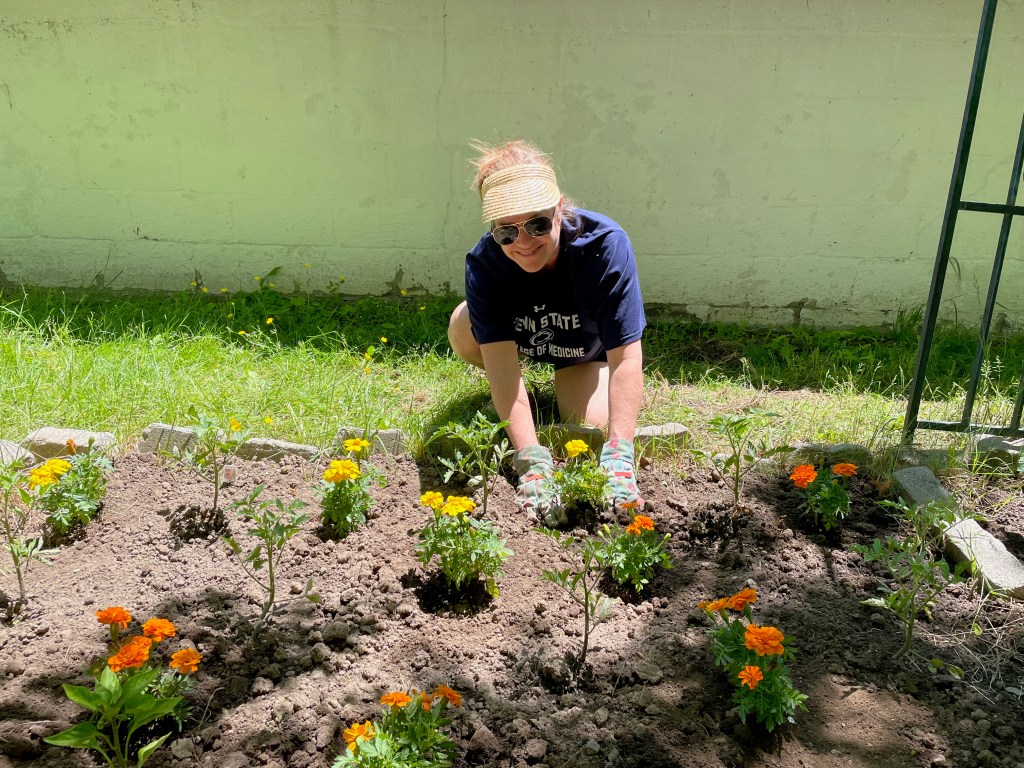
I grew up outside a big city, but my father made it feel like we lived on a farm, which was pretty cool. He grew a HUGE garden every summer, complete with so many tomatoes that he had to give them away to friends and family. They always looked forward to getting them!
Now that I have my own home with at least a little bit of land, I decided to try a garden too! Growing your own food is so satisfying, so I recommend trying it, or at least hitting your local Farmers’ Market (see my post on what is worth getting there). Home-grown vegetables, I’ve found, are sweeter, firmer and fresher tasting, while sparing yourself and your family the preservatives.
Here are some ways that I’ve learned to plan, plant, and tend to the garden that doesn’t take a lot of time and effort at all.

Preparing the Soil
First, you want to start with really nutrient rich soil that is easy to hoe. My dad used to use an electric tiller to prepare the soil every year, and that obviously works well. I want my soil to be really easy to work with, but without that extra effort.
So I use compost! I am showing how crunchy I am here, but I make my own compost for the garden. You can go to your local composting spot or a local farm for manure- those are great options. But I got into the habit of composting and have never looked back. I was putting out so much garbage, and a lot of it was food scraps and stuff. So I thought, ‘why am I doing this?’
This bin below works really well, and I keep it outside next to the garden. It works beautifully in the autumn to get rid of the MANY leaves that fall in the yard.
Bread crusts or moldy bread, coffee grounds, vegetables and fruit peelings, corn husks and cobs, old pasta, stale crackers…don’t throw these things into a landfill!

Planning
Time of Year. You need to make sure to start your garden when there is no longer a threat of frost. I tend to go further into the summer (ie, I’m planting now as opposed to May), because I buy my plants already about 3-4 inches high as opposed to starting them from seed. And where I live, we sometimes get some freak cold spring weather.
Climate. Be sure that your climate supports the vegetables you’re interested in growing. Fortunately for me, the veggies I like can be grown in my region. I go for those things that can be used in dishes I love in the summer: salsa, gazpacho, ceviche. So I opt for tomatoes, cucumbers, hot and sweet peppers and onions. I add a few potato plants for good measure, just because I love them.
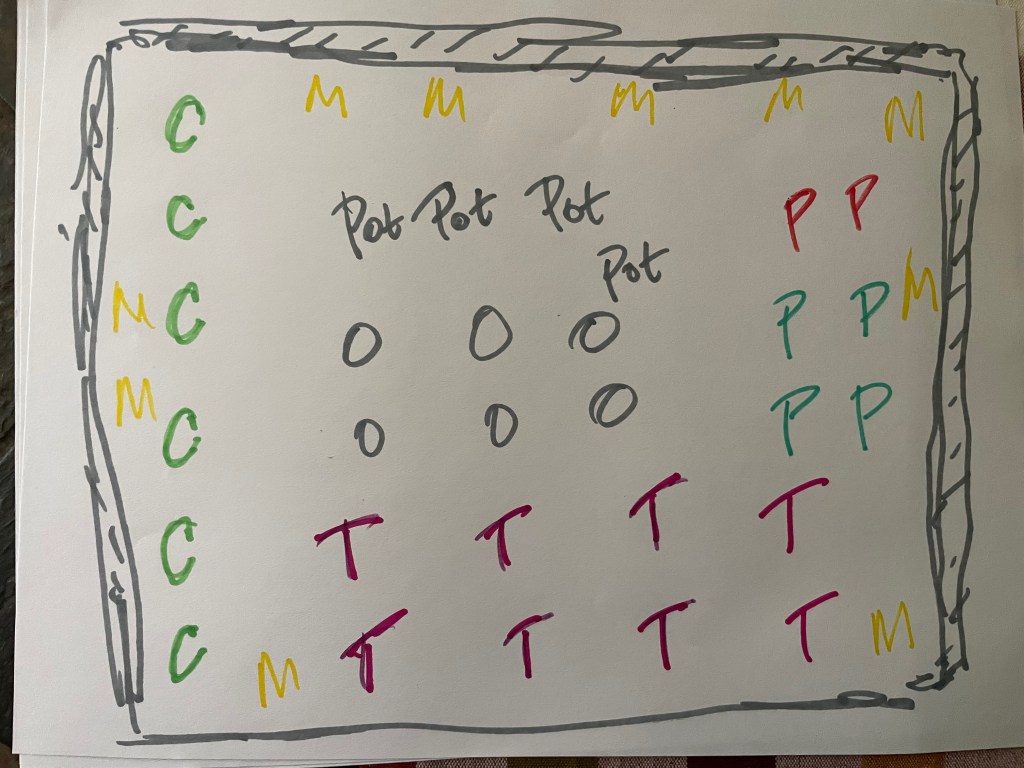
Positioning of Plants. Whatever space you’re working with, you need to make sure you have ample access to the plants once they’re planted. My garden butts up against a wall on one side. It’s also big enough that I can use the whole thing, but I need to remember to plant root vegetables (I like potatoes and onions, but try carrots!) toward the middle of the garden. They won’t need the same level of care as those I plant around the sides.
I plan it out like this (C=Cucumbers, Pot=Potatoes, O=Onions, T=Tomatoes, P=Peppers, M=Marigolds).
Spacing. You”ll need to make sure you have adequate space for your plants to grow. The amount of space needed for each plant obviously depends on what kind of vegetable it is. If you’re new to gardening, you may not realize that plants like cucumbers need ample room between them because they spread out like crazy. Root vegetables, on the other hand, don’t need much room and can be planted fairly close together.
Protecting from Animals
I will admit the first couple of summers I suffered terrible destruction of my vegetables from the animals. I actually love living somewhere I can see deer literally walking through my yard all times of the day. I also have an abundance of squirrels, rabbits, groundhogs, chipmunks, even foxes and possums. So I’ve learned over the years some ways I can try a little harder to protect my garden from these bandits.
Fencing. Here’s what I had to learn: fencing is a must if you want to keep animals away. I have gone awhile and start getting excited when I see some green tomatoes forming, then the next day they’re all gone! It’s heartbreaking and I don’t want anyone to experience it!

Natural Deterrents. My dad used to hang plastic owls in the trees around his garden, since apparently birds and rodents are scared of them (?). I don’t go that far, but opt for planting some pretty marigolds around the perimeter of the garden. I read that the scent is a deterrent for most animals; it drowns out the scent of the vegetables and makes the animals less likely to try to eat them!

Regular Care
Watering. Some vegetables need very little care. The root vegetables (potatoes, onions) I mentioned above really only need to be regularly watered. Everything in your garden will need water consistently, so I keep a garden hose accessible to the area. Generally, especially in the northeast where I live, we get a lot of rain from April-June, and very little in July and August, which is probably typical. So you’ll need to get into the habit of watering at least every other day during dry periods. It is best to not water during the heat of the day, but rather in the morning or early evening. I personally think the morning is better, so the plants are hydrated for the duration of the day. I find it generally easier to remember to do in the morning too, before the busy-ness of the day starts.
Pruning. Sometimes plants will exponentially grow to take up a lot more space than when originally planted. You’ll want to keep an eye on whether or not vegetables ( I mentioned cucumbers above) are growing too far into spaces where other plants are growing. They can literally strangle each other, and also prevent other plants from getting enough sun. You can cut back the leaves a bit to make enough space for every plant to have sufficient growing room.
Notes about Tomatoes. If you’re growing tomatoes, they will grow UP and not out. When you see them getting so tall that the stems are starting to droop, you’ll need to stake them. Just take a stick or gardening stake (basically a thin, sturdy pole), and drive it far enough into the soil that it’s very stable. Take some strong string (cooking twine is perfect) and tie the tomato vine to it so it stands up straight. If they get really tall, you may need to tie them in a few spots along the vine.
Another thing that’s important as far as regular maintenance of tomato plants is to pull off the shoots that grow between where two stems meet- you can see this area on the left in the photo below. Little leaves will grow between these stems and should be pulled off, which is really easy. You want all the energy going up through the plant to be directed toward the stems where the actual fruit is forming.

I hope you try a garden this year and it works well for you! Good luck and enjoy!


 my3girls
Leave a reply to Fresh Herbs – my3girls Cancel reply